True acne scars
Depressed or raised changes in the structure of the skin. These usually require collagen remodeling, resurfacing or a procedure selected for the specific scar type.
What We Treat
Treatment planning for Delray Beach, Boca Raton and nearby Palm Beach County
Acne can leave behind depressed scars, rough texture, enlarged-looking pores, redness and dark marks. Those concerns are not interchangeable. We first determine whether the main issue is true scarring, residual color, active acne or a combination before discussing SkinPen microneedling, fractional laser or another approach.
The goal is improvement—not perfectly poreless or scar-free skin. Deep ice-pick scars, tethered rolling scars and raised scars may require procedures outside the services offered at Dash or a referral to a dermatologist or specialist.
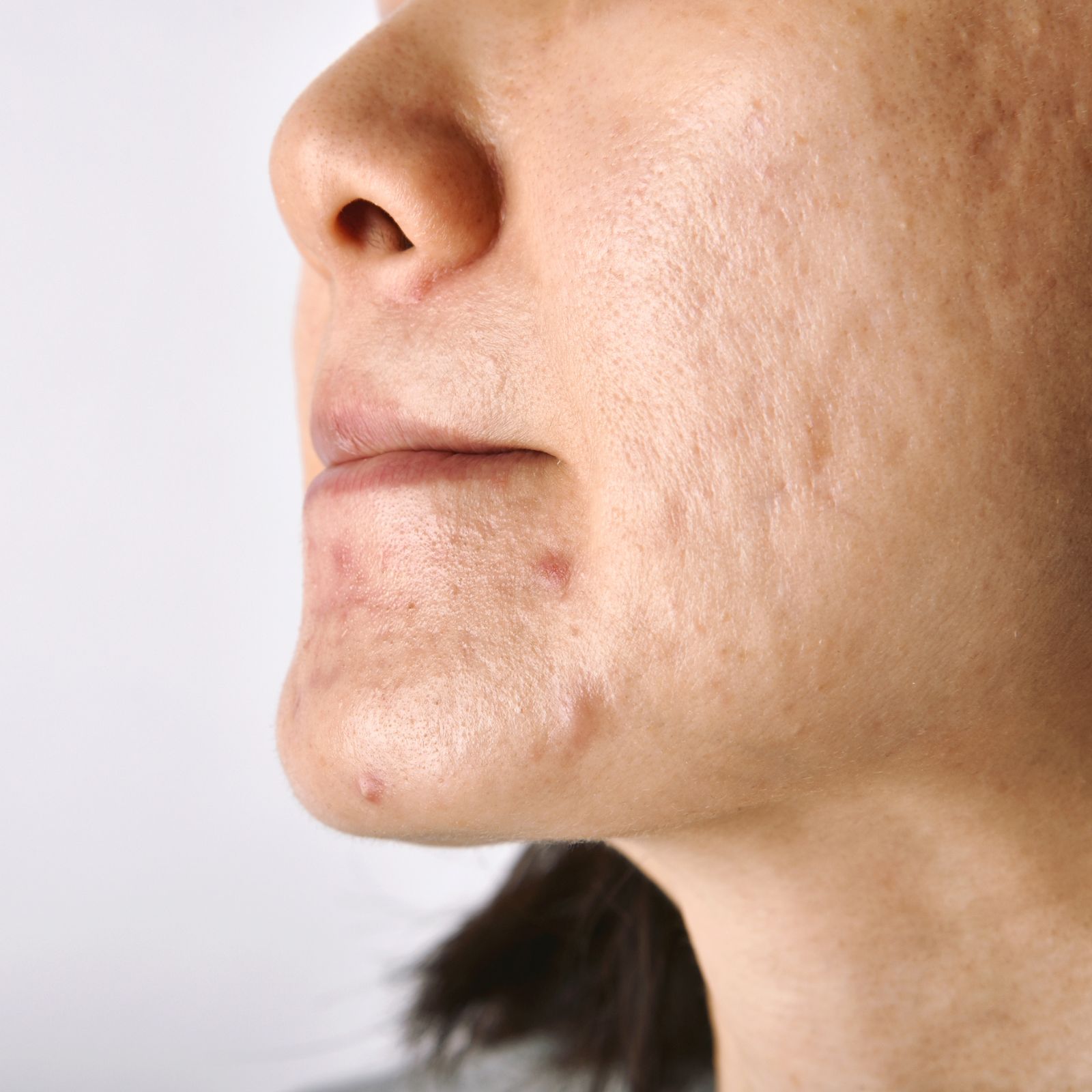
Rolling, boxcar and ice-pick scars vary in shape and depth. A treatment that helps one pattern may do less for another.
Not Every Mark Is a Scar
Acne may leave more than one visible change. Treating the wrong category can lead to disappointment even when the procedure itself was performed correctly.
Depressed or raised changes in the structure of the skin. These usually require collagen remodeling, resurfacing or a procedure selected for the specific scar type.
Flat discoloration can remain after a breakout clears. It may respond to pigment- or redness-focused care rather than the same treatment used for a depressed scar.
Roughness, enlarged-looking pores and mild surface irregularity can overlap with scarring but may not require the same intensity as deeper acne scars.
Common Depressed Scar Patterns
Many people have a mixed pattern. The purpose of identifying the type is not to label the skin— it is to choose the most realistic treatment path.
Broad, shallow depressions can create a wave-like or uneven surface. Some rolling scars are tethered beneath the skin and may need a procedure beyond microneedling or surface resurfacing alone.
Wider depressions with more defined edges. Shallower boxcar scars may respond differently from deeper scars, so the treatment depth and series should match the visible structure.
Narrow, deeper scars that extend below the surface. Because of their depth, they may respond less to broad resurfacing or microneedling and may need dermatologist-performed focal procedures.
How We Choose a Starting Point
A client with mild texture and large-looking pores may need a different plan from someone with deep mixed acne scars or ongoing inflammatory acne.
We look for ongoing breakouts, inflamed lesions, picking and irritation. Scar treatment is easier to plan once new acne is reasonably controlled.
Depressions, roughness, redness and brown marks may coexist. One procedure may not address all of them equally.
We compare the likely benefit, downtime and series length of SkinPen, fractional laser or a staged combination before recommending a starting point.
Realistic Expectations
Collagen remodeling takes time. The best endpoint is usually smoother-looking, less noticeable scarring—not perfectly flat or poreless skin.
When Acne Is Still Active
Ongoing cysts, nodules, inflammation or picking can continue damaging the skin. Active acne and acne scarring often need separate but coordinated plans.
SkinPen and fractional resurfacing are not treatments for every active breakout. When inflammation is significant, acne should be stabilized before or alongside scar treatment.
Aerolase NeoClear, selected peels, professional skin care or medical acne treatment may be considered depending on the type and severity of active acne.
When Another Specialist May Be Needed
Deep ice-pick scars, strongly tethered rolling scars and raised or keloid-like scars may respond poorly to the treatments offered at Dash alone. They may require focal chemical reconstruction, subcision, surgical techniques, injections or another dermatologist-led procedure.
We would rather explain that limitation than sell a series that is unlikely to match the scar. A combination or referral can be the more appropriate recommendation.
Frequently Asked Questions
No. Flat red or brown marks are color changes left after inflammation and are not the same as a structural depression or raised scar. A person can have both, but they may require different treatment categories.
Neither is automatically better. SkinPen offers a non-light-based collagen-induction treatment, while fractional laser can provide stronger resurfacing with a different downtime and risk profile. Scar type, skin tone, goals and acceptable recovery guide the recommendation.
Established acne scars commonly require a series. The number depends on scar type and depth, treatment selected, skin response and how much improvement is realistic. We do not promise a fixed number before evaluating the skin.
Complete removal cannot be promised. The goal is to make the scars less noticeable by improving selected aspects of depth, texture and contrast.
Many acne-scar treatments can be performed across a range of skin tones, but the device, settings, treatment depth and risk of temporary or persistent pigment change require careful selection.
Often, yes. New inflammatory breakouts can continue creating marks and scars. The most practical plan may begin with acne control and then add scar treatment once the skin is more stable.
Pores do not permanently open and close, but collagen-remodeling treatment may make enlarged pores and uneven texture look less noticeable. Results vary and usually develop gradually over a series.
Request a consultation when scarring is deep, mixed, accompanied by active acne or difficult to separate from redness and pigmentation. The treatment should be chosen after the scar pattern is reviewed.
Start With the Scar Pattern
Tell us whether acne is still active, how long the scars have been present, what treatments you have tried and how much downtime you can manage.