Sun spots and mottled photodamage
These often appear on areas that have received repeated sun exposure, including the face, chest and hands. They may look like individual flat spots or a more scattered, uneven pattern.
What We Treat
Treatment planning for Delray Beach, Boca Raton and nearby Palm Beach County
Visible brown spots, mottled tone and sun-related discoloration can look similar, but they do not always respond to the same treatment. We begin with the concern, review the pattern and history, and then discuss whether IPL, Aerolase, a peel, resurfacing or another approach makes the most sense.
This page is for cosmetic pigmentation concerns. A new, changing, bleeding, itching or otherwise suspicious spot should be evaluated by a dermatologist before cosmetic treatment.
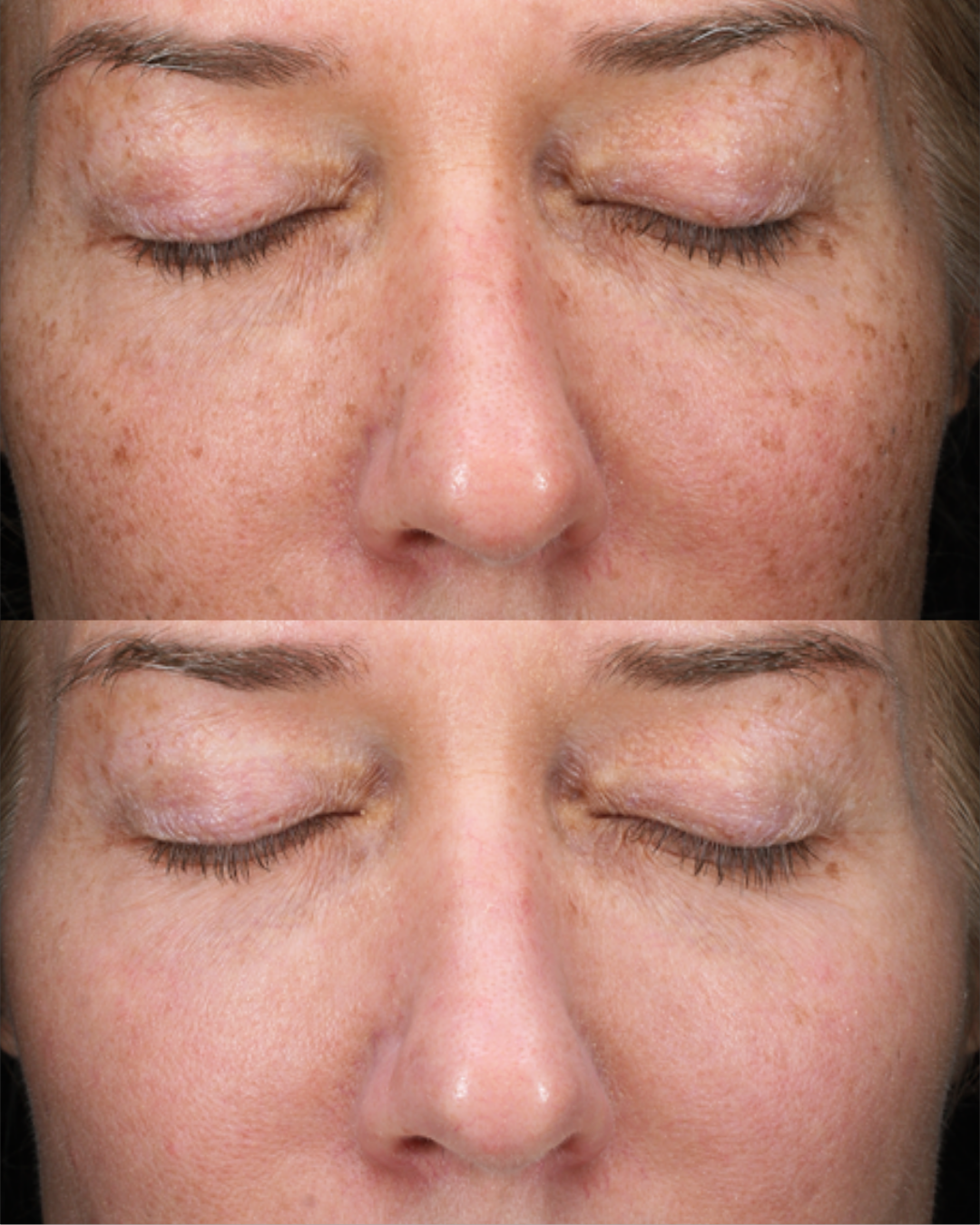
Before-and-after examples show what may be possible, but the right treatment still depends on the pigment pattern, skin type, treatment history and individual response.
Start With the Pattern
The same dark mark can have a different history, depth and trigger. That is why choosing a device before identifying the pattern can lead to the wrong starting point.
These often appear on areas that have received repeated sun exposure, including the face, chest and hands. They may look like individual flat spots or a more scattered, uneven pattern.
Acne, irritation or another inflammatory event can leave lingering discoloration. The safest and most useful plan depends on whether the skin is still active, irritated or continuing to develop new marks.
Symmetrical or repeatedly returning pigment may behave differently from an ordinary sun spot. Melasma is one example and often requires a more conservative, maintenance-focused strategy.
Where IPL Fits
IPL is one of our strongest options for visible sun damage, but the decision should be based on the skin, the type of discoloration and the person’s recent sun exposure and history.
How We Approach Pigmentation
The purpose of the consultation is not to automatically sell IPL. It is to determine which option—or combination—best matches the visible pattern, the skin and the client’s schedule.
We ask when the pigment appeared, whether it changes with sun exposure, whether it followed acne or irritation, and what treatments or active products have already been used.
Depending on the concern, we may discuss IPL, Aerolase, a chemical peel, fractional resurfacing, skincare or a more conservative step-by-step plan.
Pigmentation can return with additional sun exposure or ongoing triggers. We explain what improvement may be realistic and what long-term maintenance may involve.
Selected Client Results
These examples show Dash client results from IPL treatment. They demonstrate what may be possible, but they do not establish which treatment is appropriate for another person.
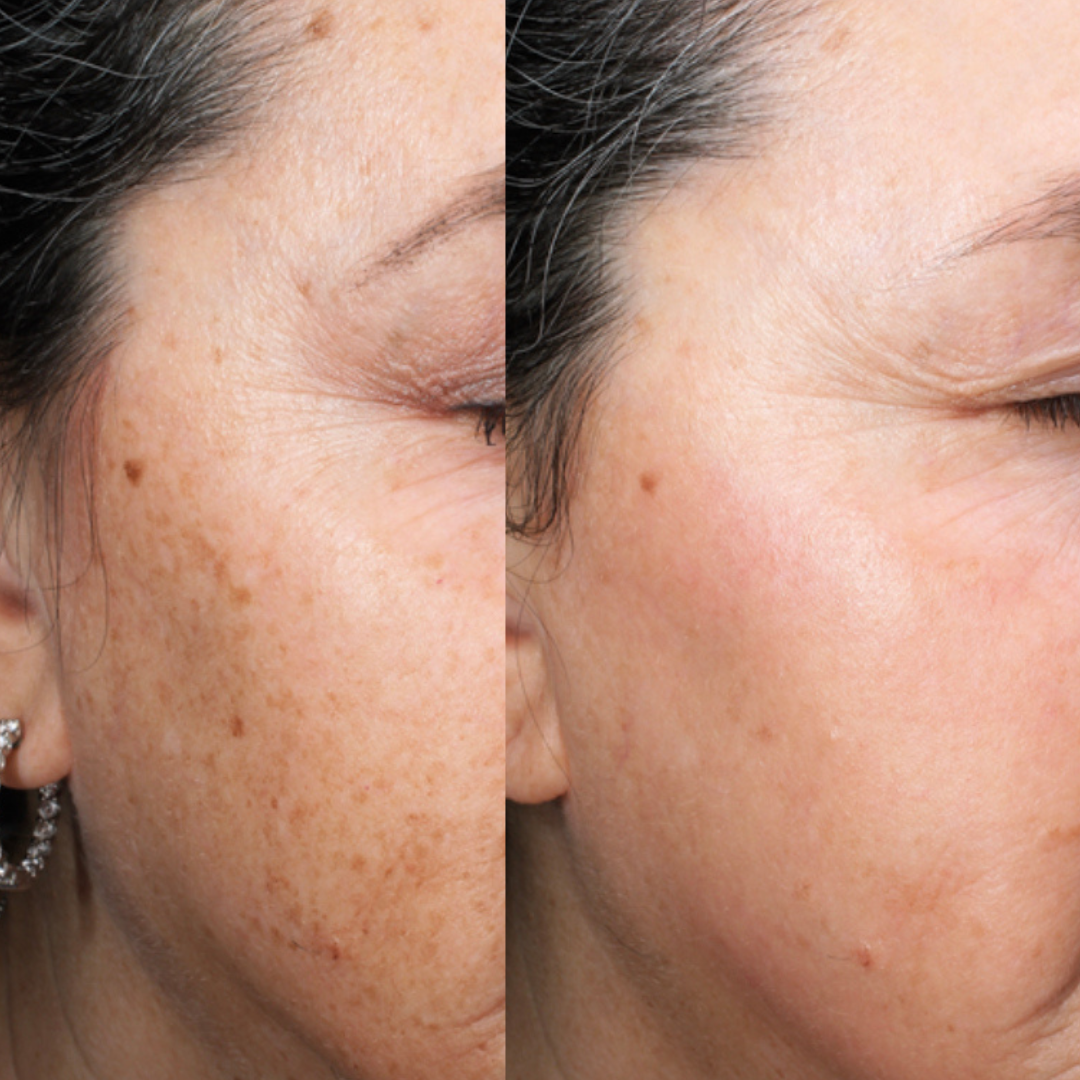
IPL Photofacial · Dash client result
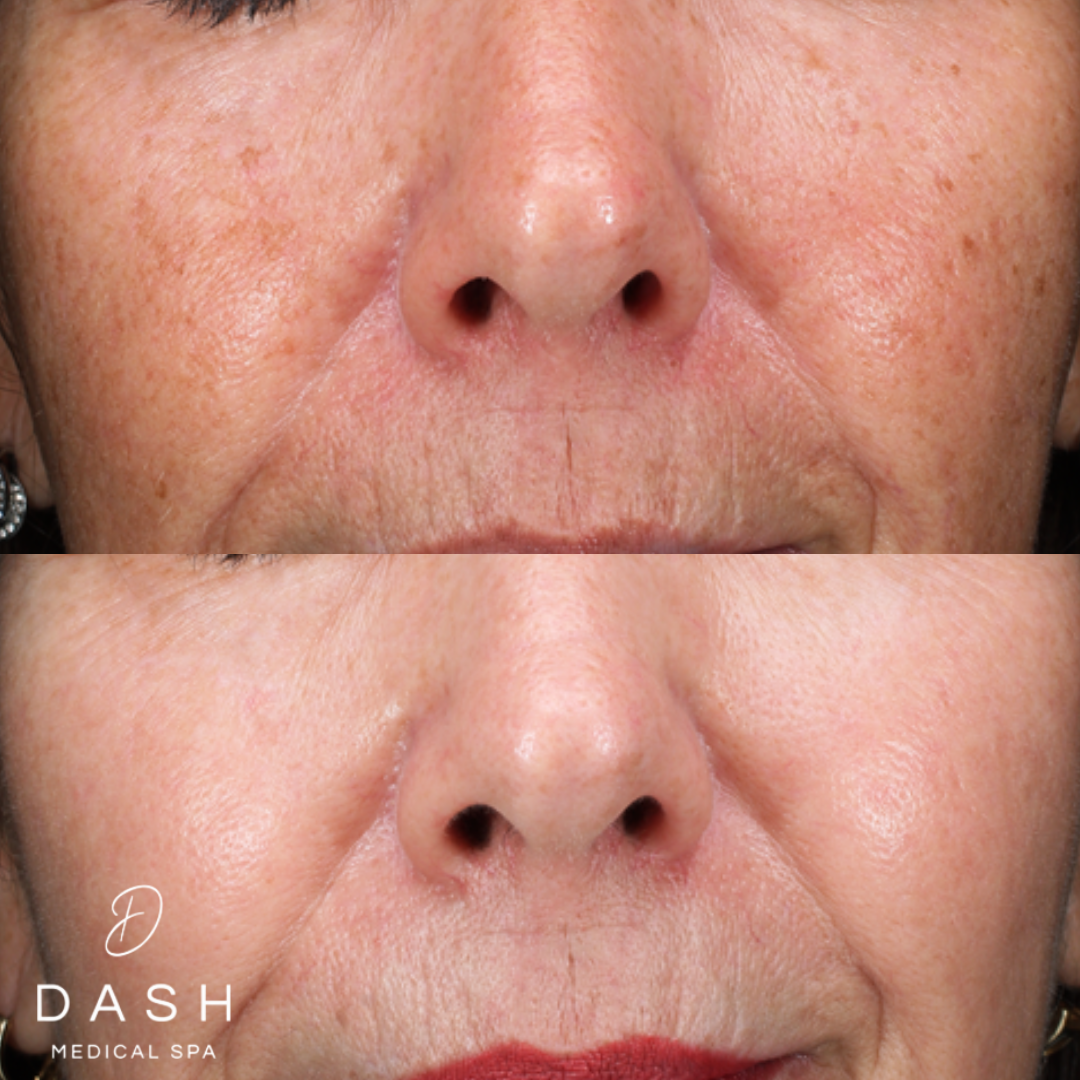
IPL Photofacial · Dash client result
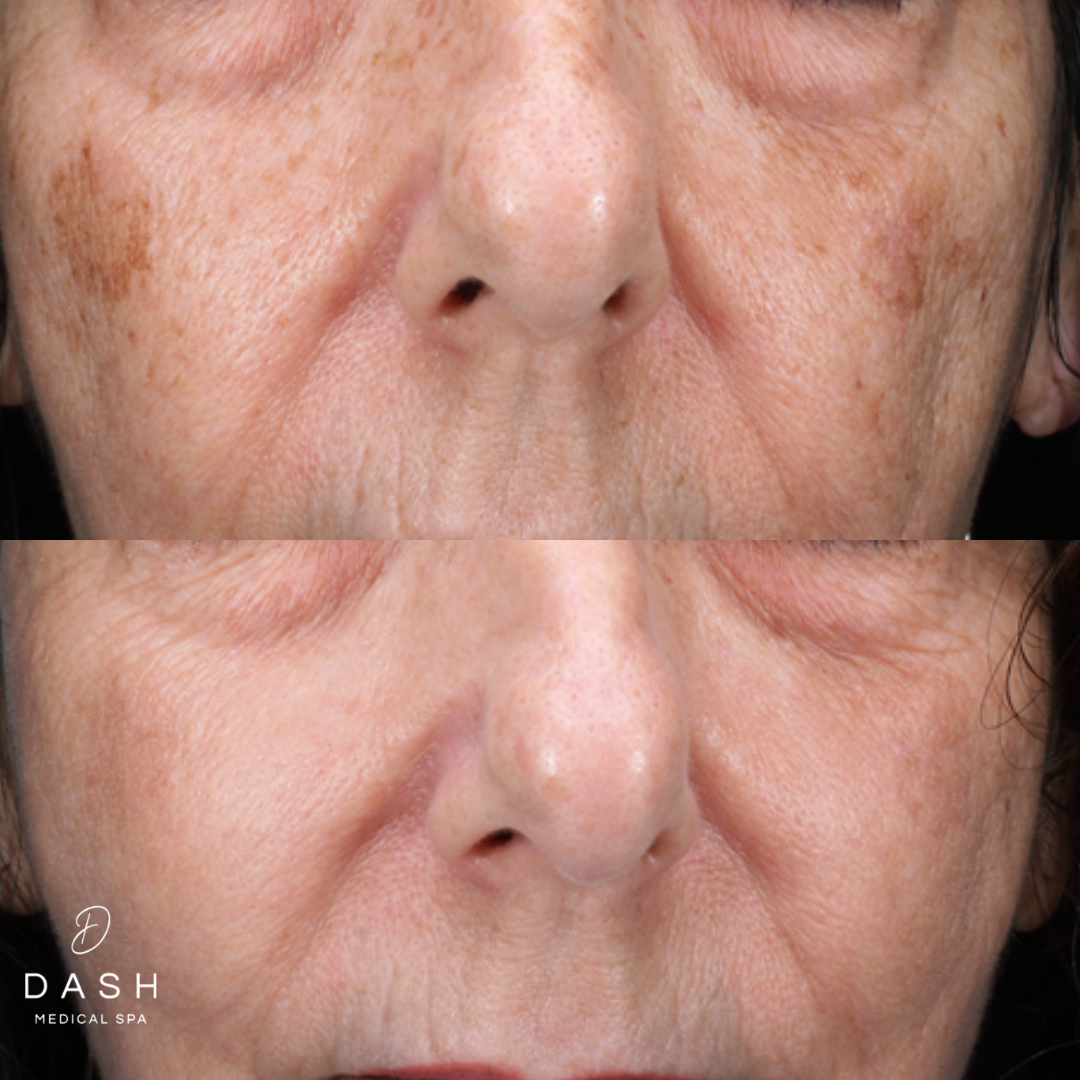
IPL Photofacial · Dash client result
Individual results vary. Lighting, camera angle, treatment settings, skin type, treatment count and home care can affect how results appear.
What to Expect
Some people see a meaningful visible change after one treatment. Others need a series, a different modality or ongoing maintenance because the pigment has more than one trigger.
Procedures can improve visible discoloration, but they do not stop future sun exposure from creating new pigment. Daily broad-spectrum SPF 30 or higher, protective clothing and avoiding intentional tanning help protect the result.
When melasma or recurring pigment is suspected, the maintenance plan may need to be more conservative and more consistent than the procedure itself.
Medical Evaluation Comes First When Needed
A spot that is new, changing, growing, bleeding, itching, crusting or otherwise unusual should be evaluated by a qualified medical professional or dermatologist before cosmetic treatment.
We would rather delay an aesthetic procedure than treat something that first needs medical evaluation. Cosmetic light and laser treatments are not substitutes for a skin cancer examination or diagnosis.
Frequently Asked Questions
Sun spots often appear as individual or scattered flat areas on skin that has received repeated sun exposure. Melasma more often appears as recurring or symmetrical patches, commonly on the face, and can be influenced by sun, visible light, heat and hormonal factors. Because the patterns may overlap, cosmetic treatment should not be selected from a photo alone.
IPL can be an excellent option for visible sun spots and mottled photodamage in appropriate candidates, but it is not automatically the best option for every form of discoloration. The pattern, skin tone, recent sun exposure, medication history and prior treatment response all affect the decision. Read more about IPL Photofacial.
Some clients see a noticeable visible change after one properly selected treatment, while others need a series or a combined plan. We do not quote a guaranteed number before understanding the pigment pattern, treatment history and goal.
Yes. Treatment can improve existing visible pigment, but new sun exposure, inflammation and other triggers can create new discoloration or reactivate recurring pigment. Sun protection and maintenance are part of preserving the result.
Many pigment concerns can be treated across a range of skin tones, but the safest device, settings and strategy may differ. A treatment that is appropriate for one pigment pattern or skin tone may not be appropriate for another. This is one reason we offer more than one treatment category.
The chest and hands are common areas for visible sun damage. Whether IPL, a peel, resurfacing or another option is appropriate depends on the appearance of the skin, the specific area and recent sun exposure.
When you already know that your concern has previously responded well to IPL and there are no new changes, direct booking may be reasonable. When the pigment is new, patchy, recurring, difficult to classify or has not responded as expected, a consultation is the better starting point.
Choose the Starting Point
Tell us what you are seeing, where it appears and what you have already tried. We will help you narrow down which treatment options are worth discussing.