Fine surface lines
Small lines may become more noticeable as the surface becomes drier, thinner or more sun damaged. Light resurfacing, peels or collagen-focused treatment may be discussed depending on their depth.
What We Treat
Non-injectable treatment planning for Delray Beach, Boca Raton and nearby Palm Beach County
Fine lines and wrinkles may come from repeated facial movement, collagen loss, sun exposure, skin texture changes or a combination. This page focuses on non-injectable options that may improve skin quality, surface texture and selected lines.
Resurfacing and collagen-remodeling treatments do not stop facial movement or remove every established wrinkle. The realistic goal is smoother-looking skin and less noticeable lines, with the treatment intensity matched to the concern and acceptable downtime.
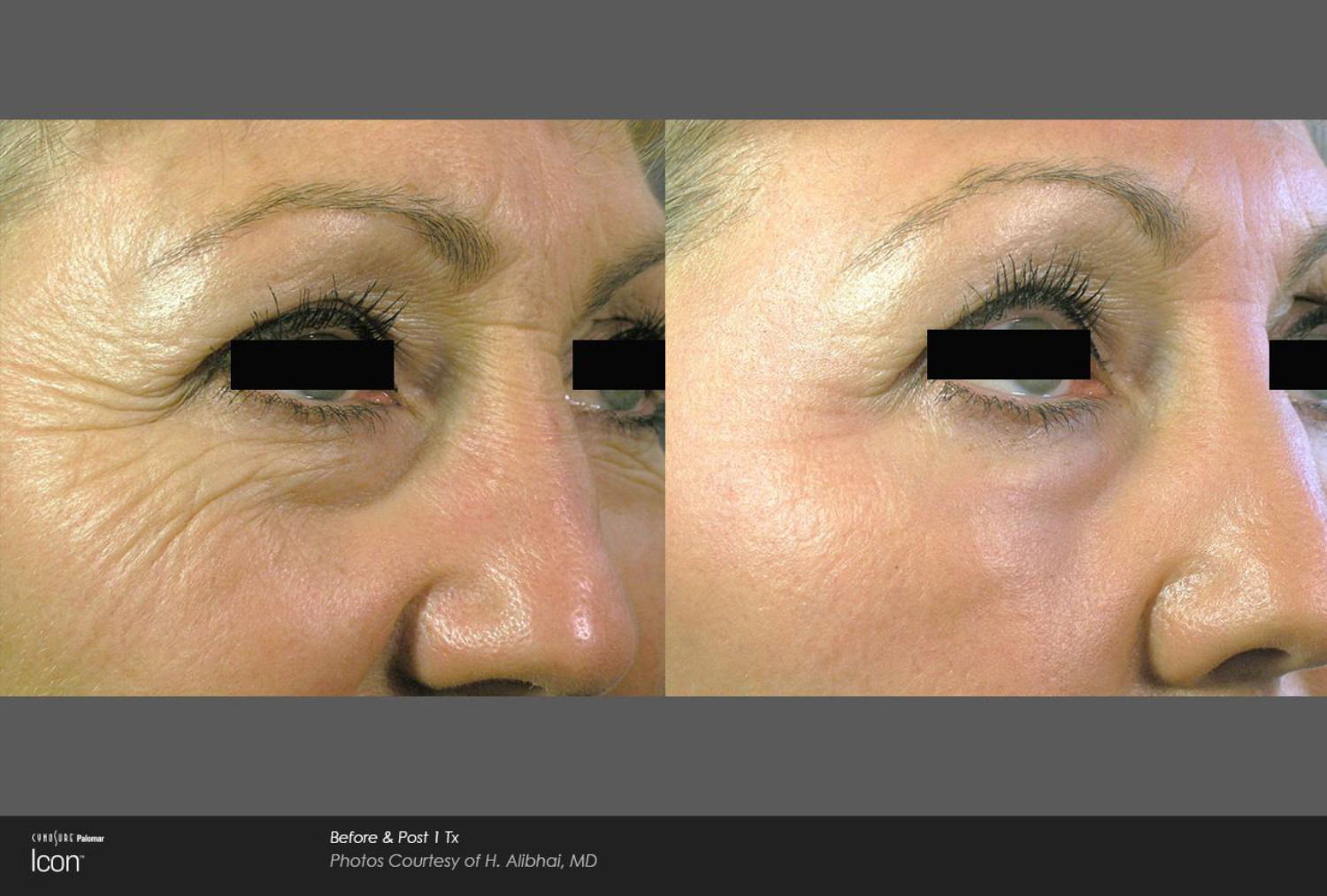
Clinical example provided by the technology manufacturer and credited in the image. This is not a Dash client. Individual results vary.
Start With the Pattern
Where the line appears, whether it remains visible at rest and whether texture or laxity is also present all influence which non-injectable option is worth considering.
Small lines may become more noticeable as the surface becomes drier, thinner or more sun damaged. Light resurfacing, peels or collagen-focused treatment may be discussed depending on their depth.
Lines that remain visible without facial movement may involve deeper collagen loss and textural change. They generally require stronger or repeated treatment and may not disappear completely.
Thin, finely wrinkled or loose-looking skin is not the same as one isolated line. Skin quality may improve, but significant laxity can exceed what resurfacing or microneedling can reasonably correct.
Related, But Not Interchangeable
The visible concern may include more than one age-related change, but each part has a different realistic endpoint.
Creases may be superficial or established. Non-injectable treatments generally aim to soften their appearance by improving the surrounding skin rather than erasing the line.
Roughness, enlarged-looking pores and mottled tone can make wrinkles look more noticeable. Resurfacing may improve several of these concerns together.
Laxity can deepen folds and change facial contours. Surface-focused treatments may improve skin quality without producing the change expected from a lifting procedure.
How We Choose a Starting Point
A person with early fine lines and minimal recovery time may need a different plan from someone with etched lines, sun damage and visible textural aging.
We look at movement, line depth, skin thickness, sun damage, texture and laxity rather than treating every wrinkle as the same problem.
The plan may prioritize subtle skin-quality improvement, stronger resurfacing or a gradual collagen-remodeling series depending on the goal.
Treatment strength, number of sessions, skin tone, recent sun exposure and acceptable downtime help determine the safest practical starting point.
Realistic Expectations
Collagen remodeling and resurfacing can soften selected lines, but normal movement, age-related change and future sun exposure continue.
Supportive Skin Care
Hydration and exfoliation can make the surface look fresher, but established lines usually require collagen remodeling or resurfacing for a more meaningful change.
DiamondGlow, dermaplaning and other facial treatments can improve hydration, surface smoothness and product buildup. They may make fine dehydration lines look temporarily softer.
They should not be presented as equivalent to fractional laser, SkinPen or another treatment selected for established wrinkles and collagen loss.
When Another Recommendation May Be More Honest
Deep folds, significant skin laxity, prominent under-eye bags or contour changes caused mainly by volume loss may respond only modestly to resurfacing or microneedling.
We would rather explain the limitation than oversell a skin-quality treatment. The consultation should separate what can reasonably improve from what requires a different category of care.
Frequently Asked Questions
There is no single best treatment for everyone. Fractional laser may provide stronger resurfacing, SkinPen may support gradual collagen remodeling, Aerolase may fit a lower-downtime goal and selected peels may improve superficial lines and tone.
Complete removal cannot be promised. Non-injectable treatments generally aim to soften selected lines, improve texture and make the skin look smoother.
Neither is automatically better. Fractional laser can provide stronger resurfacing with a different recovery profile, while SkinPen offers a non-light-based collagen-induction approach that is commonly completed as a series.
The number depends on the line depth, treatment selected, treatment intensity, skin response and desired level of improvement. Established lines commonly require a series or periodic maintenance.
Many fine-line and texture treatments can be performed across a range of skin tones, but device choice, settings, peel selection and the risk of pigment change require careful planning.
A facial may temporarily improve hydration and surface smoothness, which can make dehydration lines look softer. It does not create the same structural remodeling as fractional laser or microneedling.
Common areas include the face, around the eyes when appropriate, the mouth area, neck and chest. The device, treatment depth and safety considerations vary by location.
Request a consultation when the lines are established, several concerns overlap or you are comparing treatment intensity and downtime. The recommendation should follow the visible pattern rather than begin with a device guess.
Start With the Line Pattern
Tell us where the lines appear, whether they remain visible at rest, what treatments you have tried and how much downtime you can realistically manage.